Promotion QA 16 checks
The Deals Operating System
A promotion can look right and still start from the wrong price. This is a working prototype that reads the deal sheet and the system side by side, runs sixteen checks the moment a deal lands, says what is wrong in plain words, and names the team that owns the fix.
Three minutes and forty-six seconds. Then a six-minute walkthrough of every check, and a live copy of the engine you can break yourself.
How it works
One intake row. Sixteen checks. One verdict.
The submitting team fills one row: product, offer, stores, dates, prices, funding and readiness flags. Eleven fields are mandatory, including the SKU, both prices and the limit per customer. What they submit stays on the sheet; QA writes the verdict back in the last two columns, so the claim and the answer sit side by side.
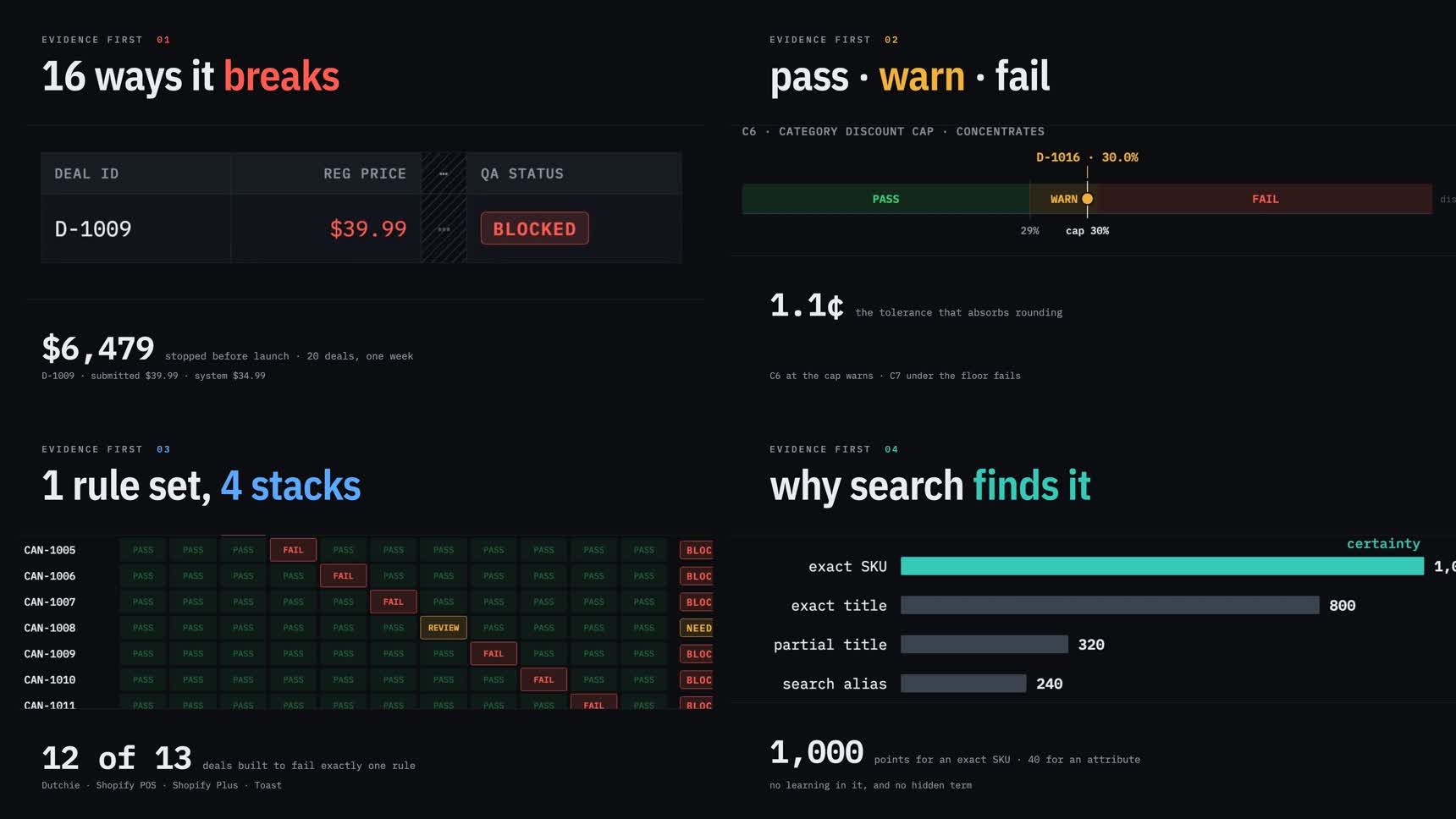
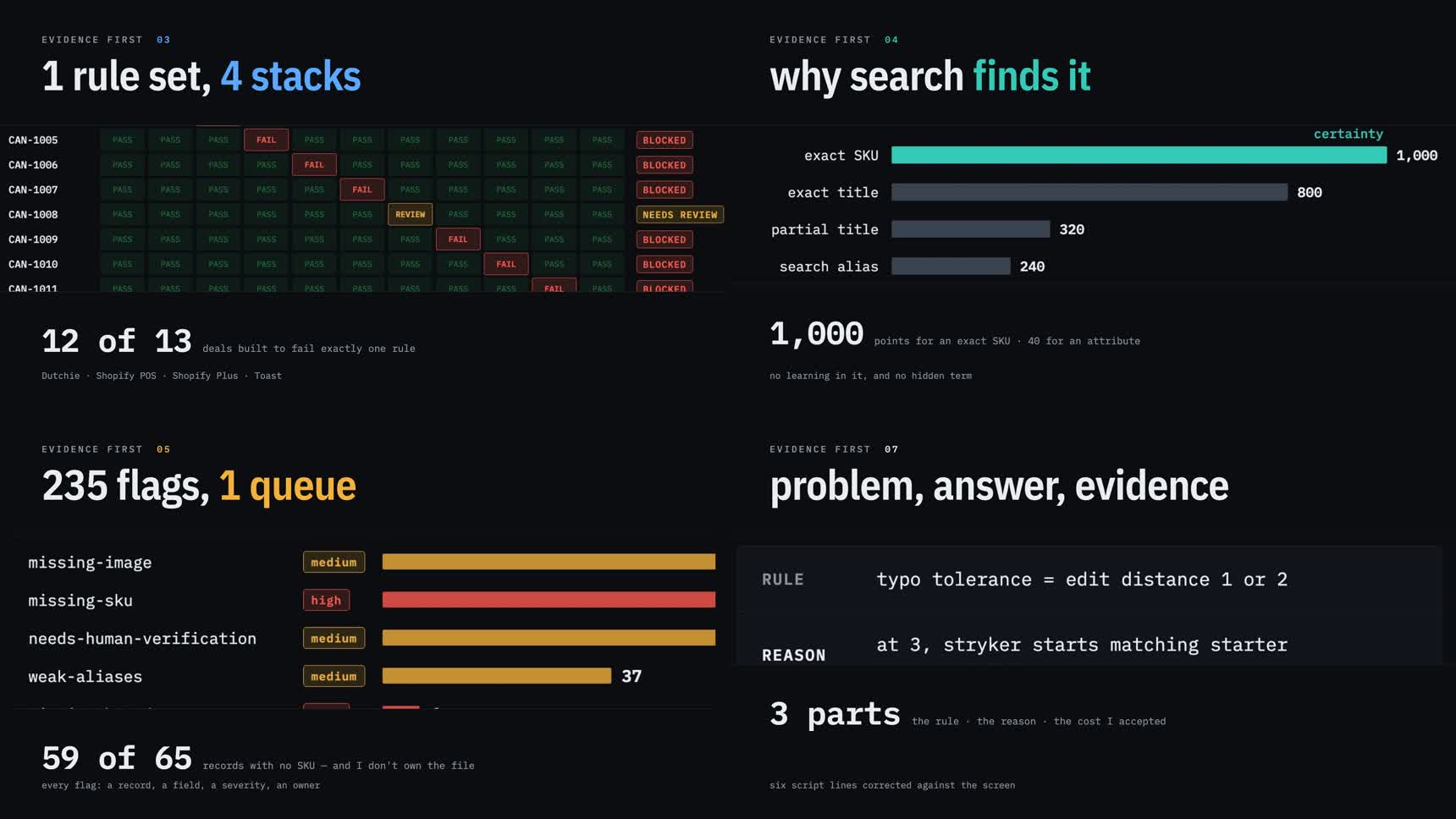
Every check returns one of four answers. One failure blocks the deal. Warnings with no failure mean a person has to decide. Sixteen passes clears it to build. "Not applicable" is kept separate from "pass", because a check that did not run is not a check that agreed.
Friday's report
Written from the same rows
How many cleared first time, which checks keep firing, and which team keeps hitting them. In the modeled week: 20 submitted, 7 cleared first pass (35%), 11 blocked before a menu, 2 held for a decision. The dominant failure was vendor-agreement coverage, then vendor caps, then pricing. One root cause: deal sheets written without the agreement terms or the live system price in front of the writer.
Exposure figures on the report are modeled examples, not money anyone banked.
C1–C3
- Row complete
- SKU exists
- Product, brand, category match the master
C4–C5
- Reg price matches the system
- Promo price = reg minus the stated discount
C6–C9
- Inside the category cap
- Margin clears the floor
- Signed vendor agreement covers brand and dates
- Vendor discount ceiling
C10–C12
- Dates valid, lead time
- No other promo live on the SKU
- Store codes are real
C13–C16
- Stock covers the offer
- Built on every channel
- Copy and image approved
- Wording passes the sample policy
Try it live copy of the engine
D-1009, the blocked one. Fix it yourself.
Thirty-five percent off a disposable cart. The deal sheet says the regular price is $39.99; the SKU master says $34.99. Change the numbers and watch the checks re-run — the price checks, the category cap and the margin floor are computed here exactly as the workbook does it; the other twelve are shown as they stand for this deal.
Correct the prices and the two failures clear — but the row still doesn't go green: 35% sits exactly on the category's 35% cap, so the cap check warns and the deal moves from blocked to needs-review. Correct arithmetic does not remove the decision; it moves it to the right desk.
Go deeper